






The site you are about to enter is intended for US healthcare professionals.
Are you a US healthcare professional?
Confirm and enter Visit patient siteActor portrayals
Rapidly knocks down TTR
In a clinical study, AMVUTTRA® (vutrisiran) reduced TTR at 6 weeks after the first dose and maintained
reductions with continued treatment.
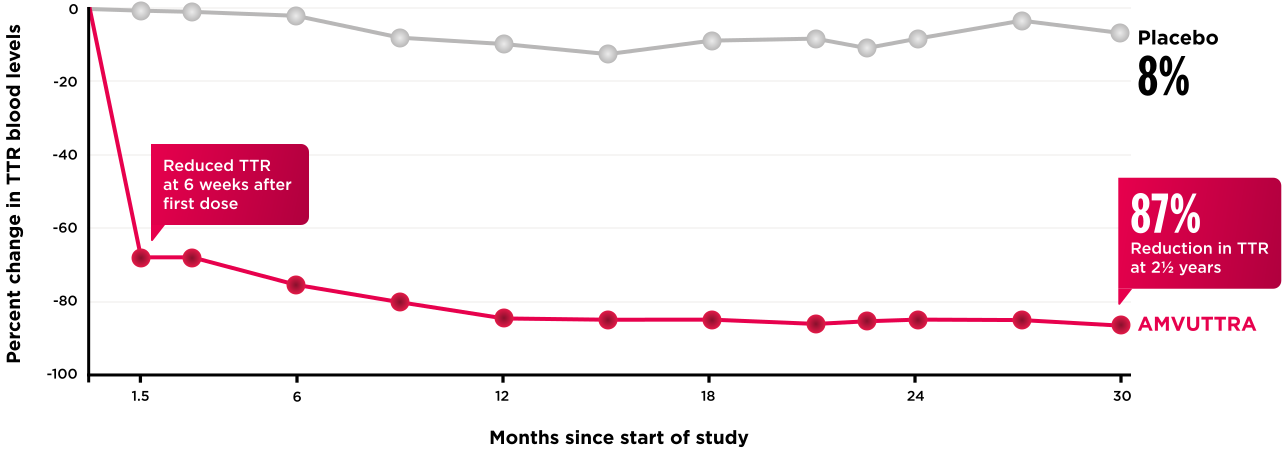
Results shown are from the ATTR-CM study. Similar reductions were seen in the hATTR-PN study (at 3 weeks after the first dose and with 1½ years of treatment).
Individual results may vary.
How AMVUTTRA works: the science behind the silencer

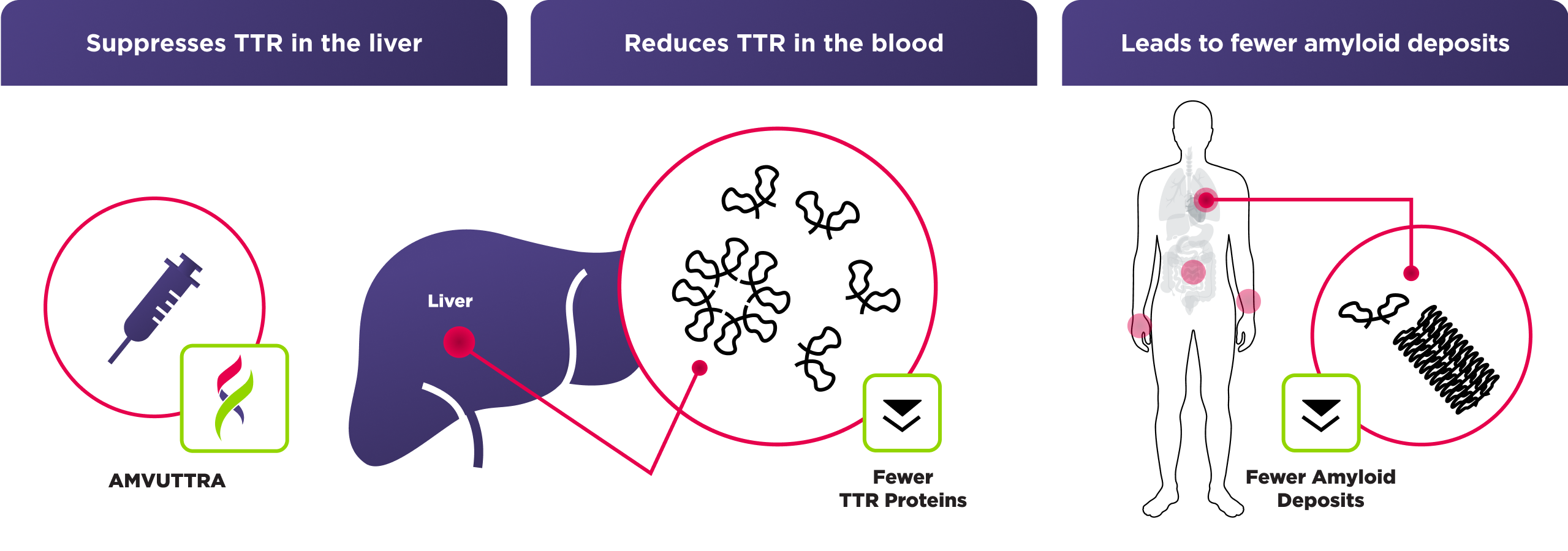
Reduces TTR at the source
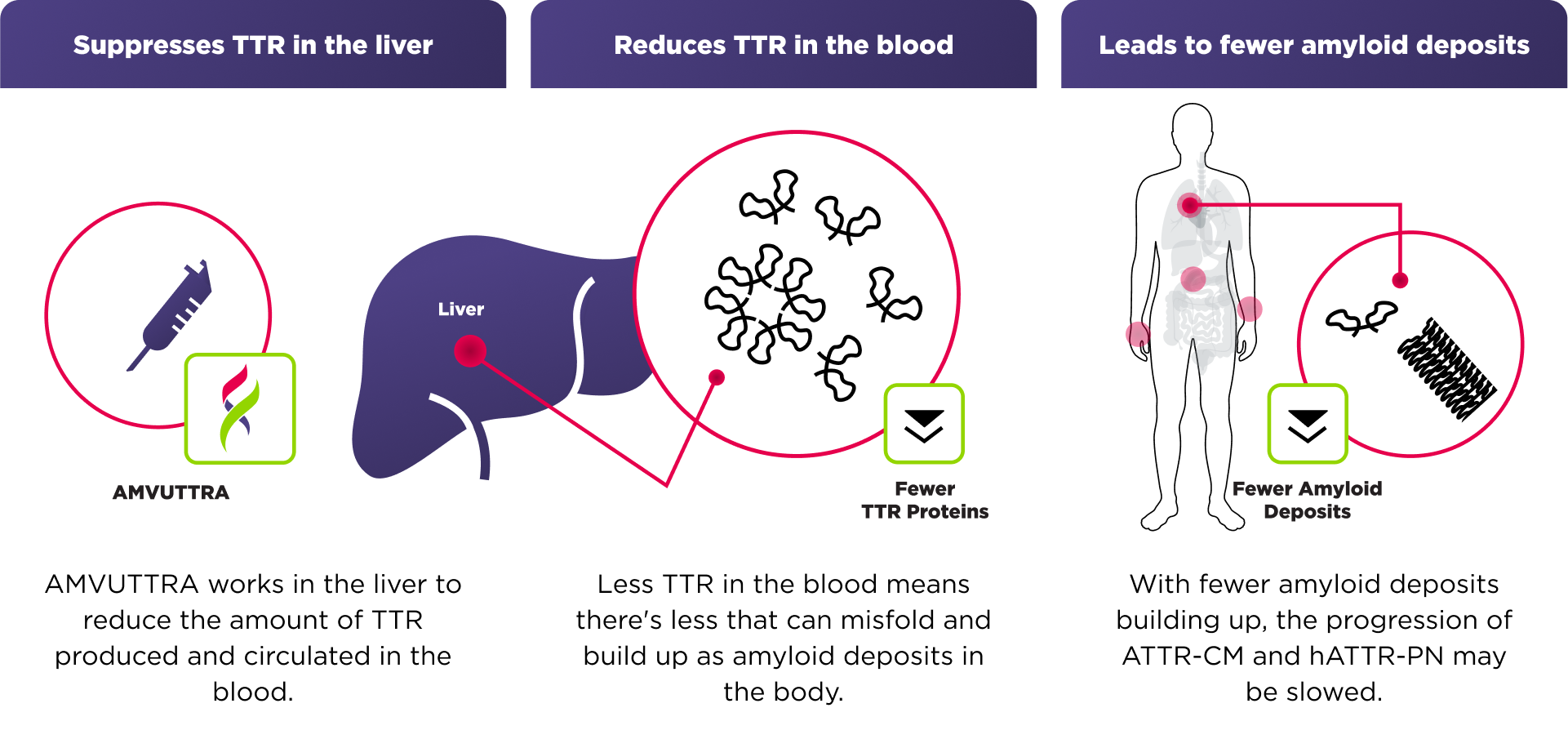
As a silencer, AMVUTTRA suppresses TTR production in the liver—where most of it is made.
Build your personalized discussion guide
This Doctor Discussion Guide can help you prepare for your next appointment and discuss your treatment goals.
If you're the caregiver of someone with ATTR-CM or hATTR-PN, complete this guide together.
Or, you can download a version to print and fill out.


Actor portrayal

Actor portrayals
These are answers to commonly asked questions. Talk to your doctor for more information.
ATTR-CM treatment options work in different ways to reduce misfolded TTR proteins from building up in the body and causing damage. There are currently two main types of FDA-approved medications for ATTR-CM: silencers and stabilizers. Silencers work in the liver to reduce TTR production, so fewer proteins get made. Stabilizers work in the blood to keep TTR from misfolding, so fewer proteins break apart. FDA-approved treatment options for hATTR-PN include silencers.
While silencers and stabilizers are not new therapies for ATTR-CM, research and development of these types of therapies, as well as those that work differently, are ongoing.
Have a conversation with your doctor about available treatment options for ATTR-CM and hATTR-PN and how soon they may work. People may respond to treatment differently.
What are the most important things I should know about AMVUTTRA® (vutrisiran)?
AMVUTTRA can cause low vitamin A levels
Treatment with AMVUTTRA lowers the amount of vitamin A in your blood. Your doctor will tell you to take a vitamin A supplement every day. You should not take more than the amount of vitamin A recommended by your doctor.
Low vitamin A levels can affect vision. If you have problems with your vision (e.g., night blindness) while taking AMVUTTRA, talk to your doctor. Your doctor may refer you to an eye specialist.
What are the common side effects of AMVUTTRA?
The most common side effects of AMVUTTRA were pain in the arms or legs, pain in the joints, shortness of breath, and low vitamin A levels.
These are not all the possible side effects of AMVUTTRA. Talk to your doctor about side effects that you experience. You are encouraged to report negative side effects of prescription drugs to the U.S. Food and Drug Administration (FDA). Visit www.fda.gov/medwatch, or call 1‑800‑FDA‑1088.
For additional information about AMVUTTRA, please see the full Prescribing Information.
What is AMVUTTRA?
AMVUTTRA is a prescription medicine that treats the:
Important Safety Information and Indications
What are the most important things I should know about AMVUTTRA® (vutrisiran)?
AMVUTTRA can cause low vitamin A levels
Treatment with AMVUTTRA lowers the amount of vitamin A in your blood. Your doctor will tell you to take a vitamin A supplement every day. You should not take more than the amount of vitamin A recommended by your doctor.
Low vitamin A levels can affect vision. If you have problems with your vision (e.g., night blindness) while taking AMVUTTRA, talk to your doctor. Your doctor may refer you to an eye specialist.
What are the common side effects of AMVUTTRA?
The most common side effects of AMVUTTRA were pain in the arms or legs, pain in the joints, shortness of breath, and low vitamin A levels.
These are not all the possible side effects of AMVUTTRA. Talk to your doctor about side effects that you experience. You are encouraged to report negative side effects of prescription drugs to the U.S. Food and Drug Administration (FDA). Visit www.fda.gov/medwatch, or call 1‑800‑FDA‑1088.
For additional information about AMVUTTRA, please see the full Prescribing Information.
What is AMVUTTRA?
AMVUTTRA is a prescription medicine that treats the:
ATTR amyloidosis
with cardiomyopathy (also known
as ATTR cardiac amyloidosis)
hereditary ATTR
amyloidosis with polyneuropathy
transthyretin
transthyretin
amyloidosis
Kansas City Cardiomyopathy
Questionnaire
6-minute walk test
modified Neuropathy
Impairment Score +7
Quality of Life-Diabetic
Neuropathy