




The site you are about to enter is intended for US healthcare professionals.
Are you a US healthcare professional?
Confirm and enter Visit patient siteKelly, living with hATTR and taking AMVUTTRA
AMVUTTRA® (vutrisiran) is a prescription medicine approved to treat ATTR-CM and hATTR-PN in adults
ATTR can be caused by an inherited gene variant
It’s important to know if you have hereditary ATTR (hATTR), because other members of your family could also be at risk. Genetic testing is crucial for knowing whether you have hATTR.
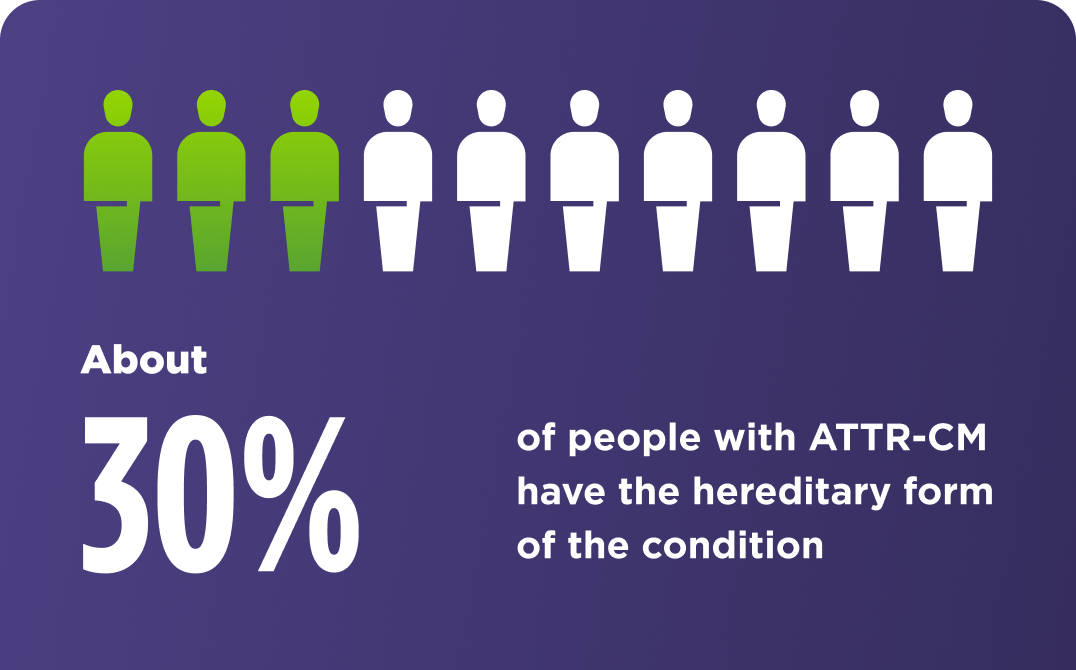
More than 120 gene variants are associated with hATTR. Anyone who carries a variant is at risk for the disease, but some variants occur more often in certain ethnicities and geographic areas.
V122I is the most common gene variant in the United States and primarily affects people of African descent
A closer look at how hATTR is passed down
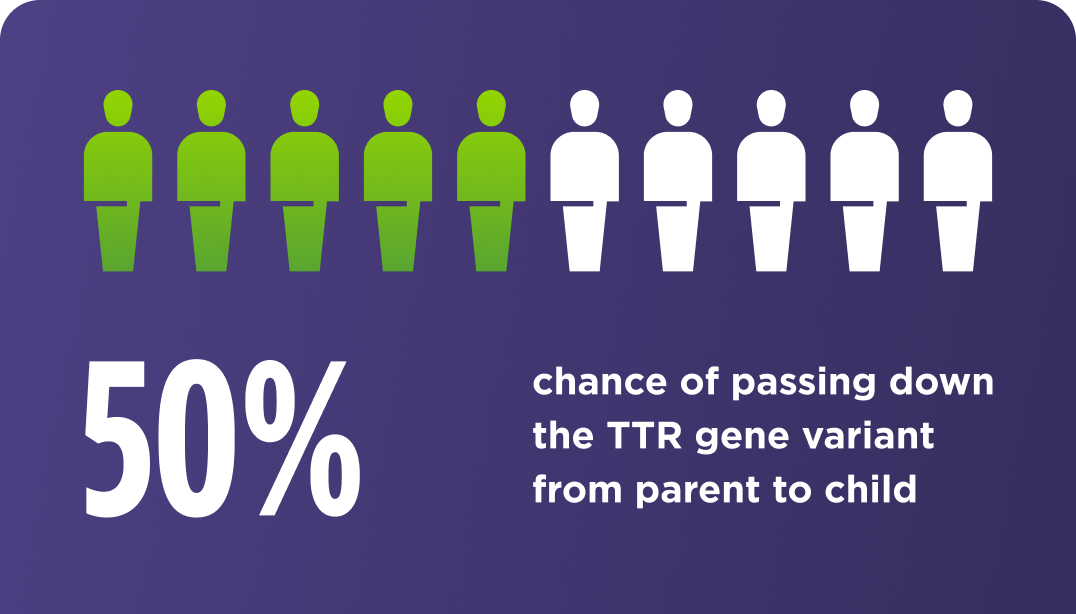
 1 of 2


Having the V122I variant can affect how ATTR progresses


How a former pro football player is tackling ATTR-CM with heart

Here are some next steps that can help you move forward:

Talk to your doctor
Tell your doctor about your symptoms and if anyone in your family is experiencing something similar or has been diagnosed with hATTR

Learn about genetic testing
Your doctor may refer you to a genetic counselor, a healthcare professional who can help you decide if genetic testing is right for you

Talk with your family
If you’re diagnosed with hATTR, tell your family members that they may be at risk and urge them to talk to a doctor if they notice any symptoms
The sooner you receive a diagnosis, the sooner you can discuss a treatment plan with your doctor.
ATTR amyloidosis can be either genetic, known as hereditary ATTR (hATTR), or age-related, known as wild-type ATTR. Genetic testing is key for identifying which type of ATTR amyloidosis a person has.
Genetic testing is crucial for knowing whether you have the hereditary form of ATTR amyloidosis. Talk to your doctor about your symptoms and any family history of the condition. If your doctor thinks you may be at risk of hATTR, they may refer you to a genetic counselor who can help you decide on next steps.
Start by talking to your doctor about your symptoms and any family history of hATTR. If your doctor thinks you may be at risk for hATTR, they may recommend that you work with a genetic counselor as a first step. A genetic counselor is a trained healthcare professional who can help you and your family learn more about genetics, understand the implications of genetic testing, and decide whether you want to move forward with it.
What are the most important things I should know about AMVUTTRA® (vutrisiran)?
AMVUTTRA can cause low vitamin A levels
Treatment with AMVUTTRA lowers the amount of vitamin A in your blood. Your doctor will tell you to take a vitamin A supplement every day. You should not take more than the amount of vitamin A recommended by your doctor.
Low vitamin A levels can affect vision. If you have problems with your vision (e.g., night blindness) while taking AMVUTTRA, talk to your doctor. Your doctor may refer you to an eye specialist.
What are the common side effects of AMVUTTRA?
The most common side effects of AMVUTTRA were pain in the arms or legs, pain in the joints, shortness of breath, and low vitamin A levels.
These are not all the possible side effects of AMVUTTRA. Talk to your doctor about side effects that you experience. You are encouraged to report negative side effects of prescription drugs to the U.S. Food and Drug Administration (FDA). Visit www.fda.gov/medwatch, or call 1‑800‑FDA‑1088.
For additional information about AMVUTTRA, please see the full Prescribing Information.
What is AMVUTTRA?
AMVUTTRA is a prescription medicine that treats the:
Important Safety Information and Indications
What are the most important things I should know about AMVUTTRA® (vutrisiran)?
AMVUTTRA can cause low vitamin A levels
Treatment with AMVUTTRA lowers the amount of vitamin A in your blood. Your doctor will tell you to take a vitamin A supplement every day. You should not take more than the amount of vitamin A recommended by your doctor.
Low vitamin A levels can affect vision. If you have problems with your vision (e.g., night blindness) while taking AMVUTTRA, talk to your doctor. Your doctor may refer you to an eye specialist.
What are the common side effects of AMVUTTRA?
The most common side effects of AMVUTTRA were pain in the arms or legs, pain in the joints, shortness of breath, and low vitamin A levels.
These are not all the possible side effects of AMVUTTRA. Talk to your doctor about side effects that you experience. You are encouraged to report negative side effects of prescription drugs to the U.S. Food and Drug Administration (FDA). Visit www.fda.gov/medwatch, or call 1‑800‑FDA‑1088.
For additional information about AMVUTTRA, please see the full Prescribing Information.
What is AMVUTTRA?
AMVUTTRA is a prescription medicine that treats the:
ATTR amyloidosis
with cardiomyopathy (also known
as ATTR cardiac amyloidosis)
hereditary ATTR
amyloidosis with polyneuropathy
transthyretin
transthyretin
amyloidosis
Kansas City Cardiomyopathy
Questionnaire
6-minute walk test
modified Neuropathy
Impairment Score +7
Quality of Life-Diabetic
Neuropathy